
Ultrasonic Cleaning for Medical Devices | EPTAM
Proper cleaning is critical in medical device manufacturing. After machining, residual material, oils, and microscopic debris can remain on a part’s surface. If those contaminants are not removed, they can compromise performance, cleanliness, and downstream requirements. Manual scrubbing may work for simple applications, but for intricate medical components, it often is not enough.
That is where ultrasonic cleaning adds value.
Ultrasonic cleaning provides a repeatable, highly effective method for removing contaminants from complex machined parts. It helps manufacturers achieve a higher standard of cleanliness while supporting consistency from part to part. At EPTAM, it is an important capability for applications where customers require elevated cleaning performance.
What Is Ultrasonic Cleaning?
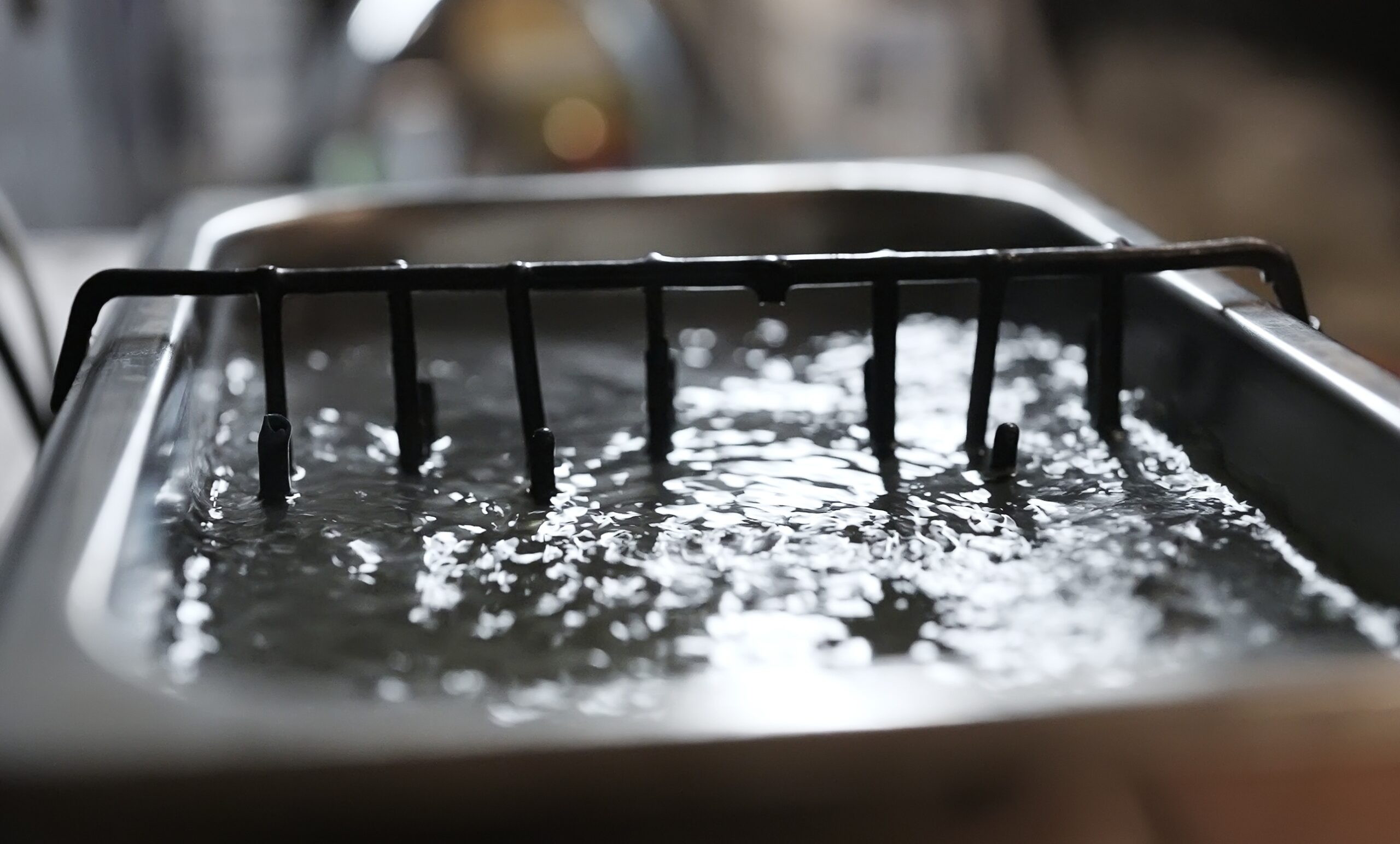
Ultrasonic cleaning uses high-frequency sound waves transmitted through a liquid solution to remove contaminants from a part’s surface. The process works through cavitation—the rapid formation and collapse of microscopic bubbles in the fluid. As those bubbles implode, they create localized energy that lifts and dislodges debris from surfaces, crevices, and hard-to-reach features.
In a typical ultrasonic cleaning process:
- A tank is filled with a cleaning solution, typically purified or deionized water
- An ultrasonic generator introduces high-frequency sound waves through the liquid
- Sound waves create millions of microscopic bubbles that rapidly form and implode.
- The implosion creates a localized scrubbing action that dislodges contaminants.
The entire process happens at a microscopic level, and the FDA even recognizes ultrasonic cleaners for their ability to decontaminate (not sterilize). Even the most complex designs and shapes are thoroughly cleaned – without inflicting any damage.
Why Standard Cleaning Is Not Enough
For many consumer products, a simple wash and rinse might be sufficient. But in medical device manufacturing, cleaning must meet much higher standards of biocompatibility. Manual cleaning simply can’t reach all the complex features of a machined part. Manual cleaning may leave behind residue and compromise the functionality of the product.
Ultrasonic methods provide a microscopic and reliable clean. A typical cycle can clean a large batch of parts in approximately thirty minutes. At EPTAM, we use highly filtered deionized water for all ultrasonic cleaning operations. Deionized water’s “purity” allows it to attract and remove contaminants, for a residue-free finish.
Our Validated Process for Critical Components
A successful cleaning process must be validated to ensure it consistently meets customer requirements. EPTAM has validated its ultrasonic cleaning process for materials like Radel and stainless steel, giving customers confidence that our methods deliver reliable results.
Ultrasonic techniques clean what you can’t see. For intricate machined products, this method ensures every surface is free of debris. This level of microscopic cleaning is a critical step that adds significant value to the finished product—supporting both biocompatibility and high performance.
At EPTAM, we recognize that not every part requires this level of decontamination. Ultrasonic cleaning is reserved for applications where customers specify it or where the highest level of cleanliness is essential. But when it is required, we rely on ultrasonic cleaning to deliver consistent, proven results.
The Benefits of Ultrasonic Cleaning
For customers considering this advanced cleaning method, let’s run through some of the distinct advantages, when compared to traditional techniques.
EPTAM specializes in:
- Superior Cleanliness Removes surface contaminants without damaging the part.
- Consistency and Repeatability An automated cycle to ensure consistent standards.
- Efficiency Multiple parts can be cleaned o reduce lead times and improve efficiency.
- No Harsh Chemicals Cavitation reduces the need for harsh or harmful substances.
Supporting Medical Manufacturing Today—and Evolving for Tomorrow
Ultrasonic cleaning is an important part of how EPTAM supports high-performance medical manufacturing today. Our current capabilities enable us to deliver consistent, repeatable cleaning for complex components where cleanliness is critical.
As customer needs continue to evolve, so do our processes. We are continually evaluating and enhancing our cleaning capabilities to support more advanced requirements, increased throughput, and even higher standards of quality.
Conclusion: A Commitment to Quality
Ultrasonic cleaning’s ability to gently and effectively decontaminate complex parts makes it a vital step in medical device manufacturing. It will continue to serve as a primary cleaning process for many medical products manufactured at our Northfield, NH facility.
Our in-house capabilities ensure components are consistently clean, safe, and ready for critical applications—giving EPTAM’s customers the confidence to deliver high-quality medical devices to the market.